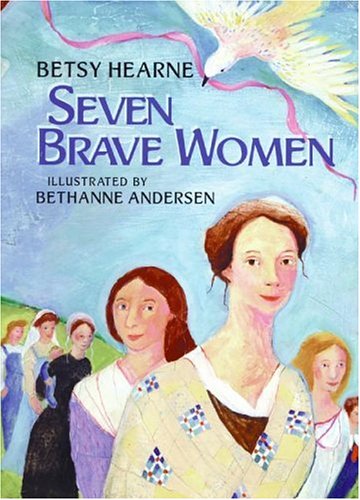
Hearne, B. (2006). Seven Brave Women. New York: HarperTrophy.
Betsy Hearne has her Ph.D. from the University of Chicago’s Graduate Library School and was a book editor for Booklist and The Bulletin of the Center for Children’s Books. She has written and edited books for children as well as adults, and her book Seven Brave Women is a winner of multiple awards, including the Jane Addams Book Award, which focuses on books that promote peace, social justice, and community. The author speaks about the creation of the story on the website for the University of Chicago (http://people.lis.uiuc.edu/~ehearne//longbio.html): “Seven Brave Women didn't take very long to write, but it took my whole life to hear. And the best thing about it is the way those women wanted to share, not star, and the way readers have shared their own family stories in return. Listening is still the best thing I ever learned.” Hearne has a passion for storytelling and listening that comes out in her book.
An excerpt from the introduction to Seven Brave Women reads: “My mother does not believe that wars should be fought at all. She says history should be her story, too, and she tells stories about all the women in our family who made history by not fighting in wars” (1). The book is broken into chapters, and chapters 1-7 chronicle the lives of seven women throughout history and their roles of bravery. The roles are as simple as remembering stories, and as complex as opening hospitals. The last chapter of the book is written in first person, and reveals a young girl’s plans for herself for the future.
There are no pictures of men in the book, and there is not much mention of them. When they are mentioned, they are supporting characters; it is clear that this story is about women. However, it is clear that the women in the book do not hate men. Many of them were married with children, and they are portrayed as caring for their families deeply. The illustrations in the book show women as capable, powerful, and strong, while still being caring and polite. The women are inventive, assertive, and all can be considered positive role models, no matter what their contribution to history. This book was so powerful because it gives a variety of important messages to young readers, no matter what their gender. Women are powerful, capable people who can solve problems and be brave and heroic. The story also promotes creativity, determination, and peace.


No comments:
Post a Comment