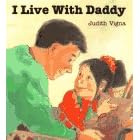
Vigna, J. (1997). I Live With Daddy. Morton Grove: Albert Whitman & Company.
Judith Vigna is a hugely popular children’s author. She writes about difficult issues for children including death, alcoholism, divorce, and loss. Many educators have utilized her books as resources and there are many extension activities available on the internet incorporating Vigna’s books. Her books received positive reviews from people looking to teach children about sensitive and difficult subjects.
The story is told by Olivia, a young girl whose parents are divorced. In contrast to popular portrayals of divorced families, Olivia lives with her father. She reveals that she misses her mother and mostly sees her on TV since she is a reporter. Her father is kind and patient, and he and Olivia share some responsibilities, like cleaning the house. Vigna writes that Olivia goes on some adventures with her mom, and it is obvious that she looks up to her as she chooses to write a story about her mother’s life for Writer’s Day at school. Her mother promises to attend and Olivia is very excited. However, her mother does not show up on time, and Olivia is very angry and hurt. She realizes that “Daddy never missed anything, even if he had to leave work early” (21). She does not want her dad to feel left out because she wrote her story about her mother’s life. Olivia decides to dedicate her book to her father, and they are seen reading her story together on the last page.
In the book’s illustrations, we see Olivia’s father vacuuming, cooking dinner, reading to her, and being a very supportive parent in both traditional “mother” and “father” roles. He even helps her write and edit her story which is written about her mother’s new life. This book was powerful because Olivia’s father is such a positive, strong, supportive presence in her life. It is also notable that he always tells Olivia how much both of her parents love her. There is not any animosity portrayed, even though the parents are divorced and the father spends almost all of the time with Olivia. One problem with the book is the portrayal of the mother. She is consistently late or too busy to spend time with Olivia. However, Olivia does not seem to mind most of the time, and reveals that her father does an excellent job caring for her. This book was so powerful because it reverses a traditional image of children of divorce. Even though the book features a negative portrayal of a woman, the positive portrayal of the father outweighs this problem in this context. Also, fathers are frequently absent or disengaged in children’s literature, so the positive portrayal of Olivia’s father in both parental roles is a positive image for children. This book also addresses the issue of divorce, obviously. Further, Olivia is a strong female main character. She is able to think critically and solve her problems when she thinks back to the author’s visit to class, and decides to dedicate her book to her father.


No comments:
Post a Comment